Quality - Khp Belly Stabbing High

Potassium Hydrogen Phthalate (KHP) is a chemical compound commonly used in various industrial and laboratory applications. One of its notable uses is in forensic science, particularly in the analysis of crime scenes and evidence. This essay aims to provide an in-depth exploration of KHP's role in forensic science, with a specific focus on its application in simulating injuries, such as belly stabbing.

In conclusion, KHP has proven to be a valuable tool in forensic science, particularly in the simulation of injuries such as belly stabbing. Its unique chemical properties and non-toxic nature make it an ideal substance for studying wound dynamics and simulating crime scenes. As research continues to advance in this field, the applications of KHP are likely to expand, providing investigators with new and innovative tools for analyzing evidence and solving crimes. khp belly stabbing high quality

KHP, also known as potassium bitartrate, is a white crystalline powder with a chemical formula of C8H5KO4. It is widely used as a primary standard in acid-base titrations, a technique employed in analytical chemistry to determine the concentration of an unknown solution. KHP's popularity in this context stems from its high purity, stability, and well-defined chemical properties. Potassium Hydrogen Phthalate (KHP) is a chemical compound

The use of KHP in simulating belly stabbing involves creating a controlled environment that replicates the conditions of a real stab wound. By injecting KHP into a substrate, such as a gelatin or agar block, researchers can mimic the physical effects of a stab wound on human tissue. This includes the formation of a wound track, the dispersion of tissue damage, and the distribution of any transferred materials, such as blood or DNA. In conclusion, KHP has proven to be a

Recent studies have employed KHP to investigate various aspects of stab wound dynamics, including the effects of different blade types, angles of incidence, and tissue properties. These studies have shown that KHP is an effective tool for simulating the physical and chemical changes that occur during a stabbing event.
Examens
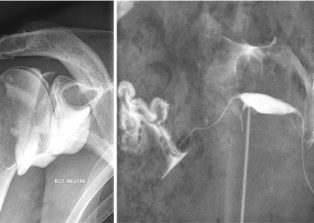
  • Radiographie de contraste

    Les rayons X permettent de différencier les structures ...

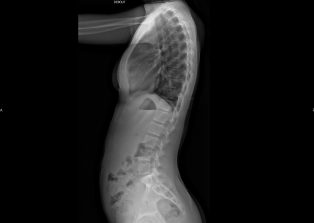
    EOS

    EOS est un appareil de radiographie innovant qui ...

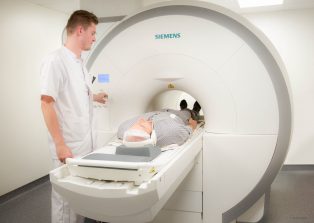
    IRM

    Imagerie par Résonance Magnétique.L’IRM est une technique permettant ...

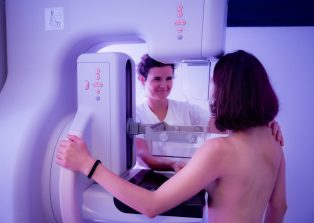
  • Mammographie

    La mammographie est un examen radiologique utilisant des ...

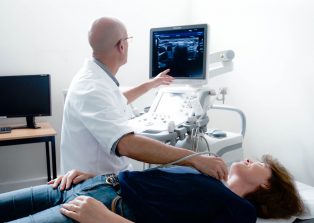
    Echographie

    L’échographie utilise les ultrasons. Ceux-ci sont émis par ...

    Scanner

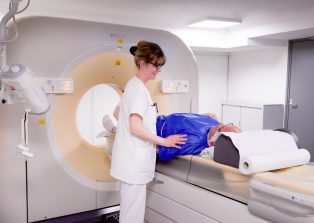
    Cet appareil utilise un émetteur de rayons X ...

  • Ostéodensitométrie

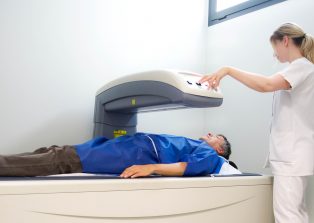
    Cet examen utilise des rayons X à dose ...

    Radiologie interventionnelle

    L’activité principale des radiologues consiste à interpréter des ...

    Radiologie générale

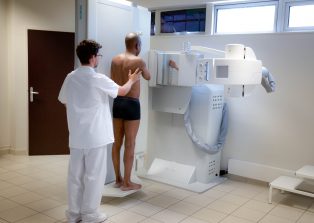
    Le passage des rayons X à travers un ...

  • Radiologie dentaire

    Le panoramique dentaire ou orthopantomogramme (OPG) est une ...

Potassium Hydrogen Phthalate (KHP) is a chemical compound commonly used in various industrial and laboratory applications. One of its notable uses is in forensic science, particularly in the analysis of crime scenes and evidence. This essay aims to provide an in-depth exploration of KHP's role in forensic science, with a specific focus on its application in simulating injuries, such as belly stabbing.

In conclusion, KHP has proven to be a valuable tool in forensic science, particularly in the simulation of injuries such as belly stabbing. Its unique chemical properties and non-toxic nature make it an ideal substance for studying wound dynamics and simulating crime scenes. As research continues to advance in this field, the applications of KHP are likely to expand, providing investigators with new and innovative tools for analyzing evidence and solving crimes.

KHP, also known as potassium bitartrate, is a white crystalline powder with a chemical formula of C8H5KO4. It is widely used as a primary standard in acid-base titrations, a technique employed in analytical chemistry to determine the concentration of an unknown solution. KHP's popularity in this context stems from its high purity, stability, and well-defined chemical properties.

The use of KHP in simulating belly stabbing involves creating a controlled environment that replicates the conditions of a real stab wound. By injecting KHP into a substrate, such as a gelatin or agar block, researchers can mimic the physical effects of a stab wound on human tissue. This includes the formation of a wound track, the dispersion of tissue damage, and the distribution of any transferred materials, such as blood or DNA.

Recent studies have employed KHP to investigate various aspects of stab wound dynamics, including the effects of different blade types, angles of incidence, and tissue properties. These studies have shown that KHP is an effective tool for simulating the physical and chemical changes that occur during a stabbing event.