Extract Data instantly from any website in minutes without coding using our ready made extractors
 No credit card required
 Unlimited Trial Credits
 Free 14-days Trial
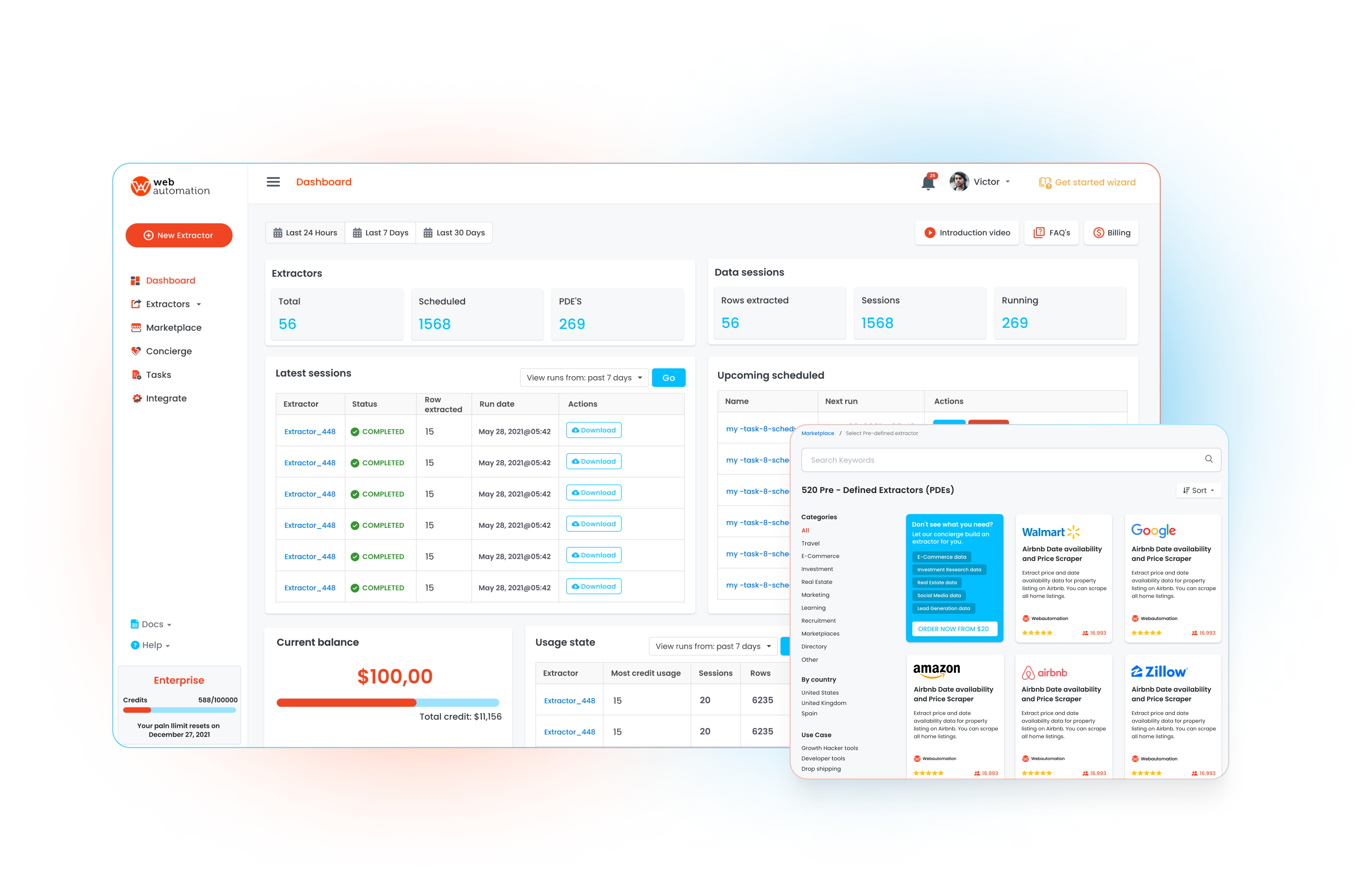








Built for continuous data collection , zero maintenance

Easily select the sources that matter most to you, from a vast range of websites and datasets
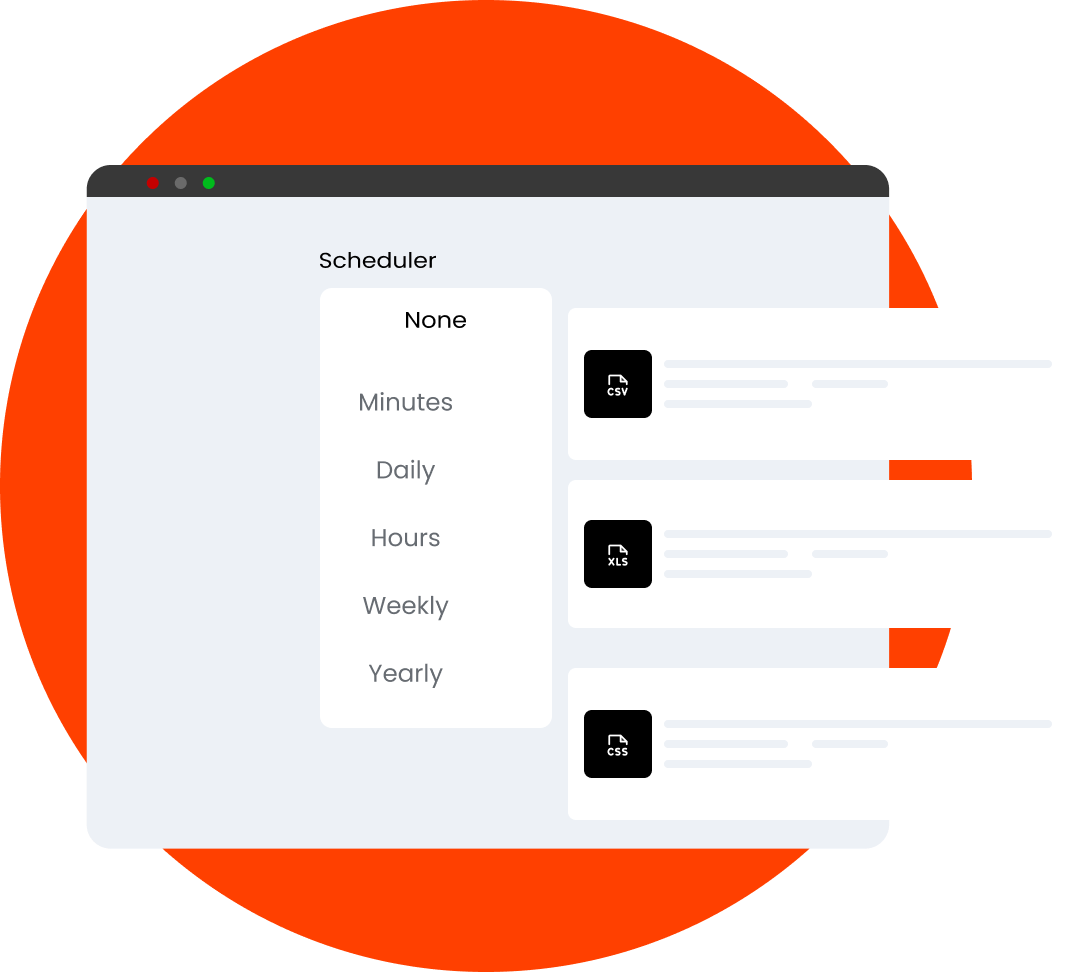
Tailor your data extraction by setting your preferences, and let our tool do the heavy lifting by extracting the structured data you need

Seamlessly download your data or integrate it directly into your workflow with support for multiple formats (CSV, Excel, JSON, JSONL, XML) and platforms
Get our concierge to build an extractor for you.
Enter URL, Select elements and submit.
We will build one for you to run on WebAutomation.
Let's Build One For Free
Asha downloaded the file and watched the progress bar crawl. When the PDF finally opened, it felt unexpectedly intimate: the author’s crisp explanations, the patient derivations, the examples that bridged abstract math and real economic questions. She read the preface, where Maddala wrote about the joy of teaching applied methods to curious minds. The tone reassured her — econometrics wasn’t just equations, it was a way to ask better questions about the world.
Weeks later, in a seminar, she presented her housing-transit regression. The class asked rigorous questions; Asha answered, drawing on the confidence she’d gained from the book. Afterwards, Prof. Kim pulled her aside. “Where’d you get that intuition?” he asked. Asha smiled and tapped her laptop. “That old Maddala PDF,” she said. “It turned the math into stories I could use.” gs maddala introduction to econometrics pdf
One section caught her eye: an example applying ordinary least squares to labor market data. The dataset was simple, but the insights were not. Asha imagined a city’s labor market as a network of tiny decisions: a factory hiring one more worker, a family choosing between jobs, a policymaker deciding whether to raise the minimum wage. Maddala’s clear walk-through turned a messy tangle of variables into a story about causality and choice. Asha downloaded the file and watched the progress bar crawl
Inspired, Asha brewed a fresh cup of tea and opened her own dataset: local housing prices and transit access. She replicated Maddala’s step-by-step regressions, translating his textbook examples into her city’s numbers. Each coefficient she estimated felt less like a number and more like an observation about people’s lives — the value of a morning commute saved, the premium for being near a reliable bus line. The tone reassured her — econometrics wasn’t just
She opened her laptop and typed the phrase she’d heard whispered across study groups: “gs Maddala introduction to econometrics pdf.” The search results were a tangle of lecture notes, forum links, and a few scans of photocopied pages. One result led to an old course repository tucked away on a university site, where she found a partially scanned PDF — chapter headings intact, margins worn, a few penciled annotations visible on the preview.
Tired of getting blocked while web scraping? Our powerful infrastructure that runs on the cloud takes care of everything so you focus on getting the data you need, when you need it.

No coding required. Processes like retries, scheduling and integrations are automated allowing for minimal user intervention

Our architecture makes webautomation.io resilient to failures using rotation of a large pool of proxies and browser fingerprinting technology

Our engineers are consistently monitoring and fixing code as the sources change. Allowing infinite scalability without service interruptions
Tired of getting blocked while web scraping? Our powerful infrastructure that runs on the cloud takes care of everything so you focus on getting the data you need, when you need it.

Asha downloaded the file and watched the progress bar crawl. When the PDF finally opened, it felt unexpectedly intimate: the author’s crisp explanations, the patient derivations, the examples that bridged abstract math and real economic questions. She read the preface, where Maddala wrote about the joy of teaching applied methods to curious minds. The tone reassured her — econometrics wasn’t just equations, it was a way to ask better questions about the world.
Weeks later, in a seminar, she presented her housing-transit regression. The class asked rigorous questions; Asha answered, drawing on the confidence she’d gained from the book. Afterwards, Prof. Kim pulled her aside. “Where’d you get that intuition?” he asked. Asha smiled and tapped her laptop. “That old Maddala PDF,” she said. “It turned the math into stories I could use.”
One section caught her eye: an example applying ordinary least squares to labor market data. The dataset was simple, but the insights were not. Asha imagined a city’s labor market as a network of tiny decisions: a factory hiring one more worker, a family choosing between jobs, a policymaker deciding whether to raise the minimum wage. Maddala’s clear walk-through turned a messy tangle of variables into a story about causality and choice.
Inspired, Asha brewed a fresh cup of tea and opened her own dataset: local housing prices and transit access. She replicated Maddala’s step-by-step regressions, translating his textbook examples into her city’s numbers. Each coefficient she estimated felt less like a number and more like an observation about people’s lives — the value of a morning commute saved, the premium for being near a reliable bus line.
She opened her laptop and typed the phrase she’d heard whispered across study groups: “gs Maddala introduction to econometrics pdf.” The search results were a tangle of lecture notes, forum links, and a few scans of photocopied pages. One result led to an old course repository tucked away on a university site, where she found a partially scanned PDF — chapter headings intact, margins worn, a few penciled annotations visible on the preview.
See how our clients are transforming their businesses with our powerful data extraction solutions.

Generative AI startup leverages Ready Datasets for Scalability
Learn more

How WebAutomation is increasing innovation in the Travel Tech Industry
Learn more
Generative AI startup leverages Ready Datasets for Scalability
Learn more
How WebAutomation is increasing innovation in the Travel Tech Industry
Learn more
Everything you need to know about the product and billing.
WebAutomation is a powerful web scraping platform that allows you to extract data from any website without coding. Simply choose from our pre-built extractors or create your own custom extractor. Our platform handles everything from IP rotation to CAPTCHA solving, ensuring reliable data extraction.
Yes, absolutely! Our platform is designed to be user-friendly and requires no coding knowledge. You can use our pre-built extractors or our visual selector tool to create custom extractors. Our intuitive interface guides you through the entire process.
We take security seriously. All data extraction is done through secure connections, and we implement various security measures including IP rotation, user-agent rotation, and proxy support. Your data is encrypted in transit and at rest.
Yes, we provide comprehensive support and training for new users. This includes detailed documentation, video tutorials, and dedicated support channels. We also offer personalized onboarding sessions to help you get started quickly.

Can't find the answer you're looking for? Please chat to our friendly team.
Join over 4,000+ businesses already growing with Web Automation.