Finally, the role of Chemcad NXT in an engineer’s toolkit is ecological as much as technical. It fits into the lifecycle of a project: initial scoping and mass-and-energy balances, preliminary equipment sizing, safety and operability checks, and handoff to detailed design. By producing transparent, auditable results and supporting iterative exploration, it helps teams make data-driven decisions earlier and with less uncertainty.

A pragmatic strength of Chemcad NXT is how it balances ease-of-use with depth. For routine tasks an engineer can rely on sensible defaults and prebuilt templates; for nuanced problems the same environment reveals knobs for setting residence times, specifying reaction kinetics, defining tray efficiencies, or customizing heat-transfer correlations. Training materials and example libraries help shorten the ramp-up time: users can adapt example flowsheets rather than starting from a blank canvas, which is especially helpful when modeling industry-standard processes such as crude distillation, gas processing, or solvent recovery.

Chemcad NXT also emphasizes data integration and workflows. Simulation rarely exists in isolation: process data, lab measurements, and equipment specifications must all be reconciled. The software supports importing and exporting streams and unit results, interfacing with spreadsheets, and generating structured reports. That makes it plausible to embed simulation studies into broader engineering tasks like feasibility assessments, debottlenecking studies, and economic evaluations. Report-generation features let teams capture assumptions, present key material and energy balances, and produce tables and plots that communicate findings to managers or clients.

Another important element is modularity. Units are encapsulated and parametrized, which makes it straightforward to configure detailed equipment: splitters, heat exchangers, compressors, reactors (with several reactor models), and various types of separation units. More advanced users can assemble complex sequences — multistage columns with interstage feeds and side draws, integrated heat-pinch networks, or recycle loops with convergence strategies — and rely on robust numerical solvers to find steady-state solutions. For many engineers, the quality of a simulator is judged by how it handles difficult convergence cases; Chemcad NXT invests in solver options, initialization strategies, and under-relaxation controls so users can guide or automate solution finding.

Chemcad NXT began as an ambitious effort to reimagine process simulation for chemical engineers: to move beyond the constraints of legacy simulators and deliver an environment that felt modern, flexible, and approachable while still handling the rigorous thermodynamics and flowsheeting tasks engineers rely on. Its design philosophy centered on three practical goals — clarity, modularity, and extensibility — and those priorities shaped its user experience and technical architecture.
chemcad nxt
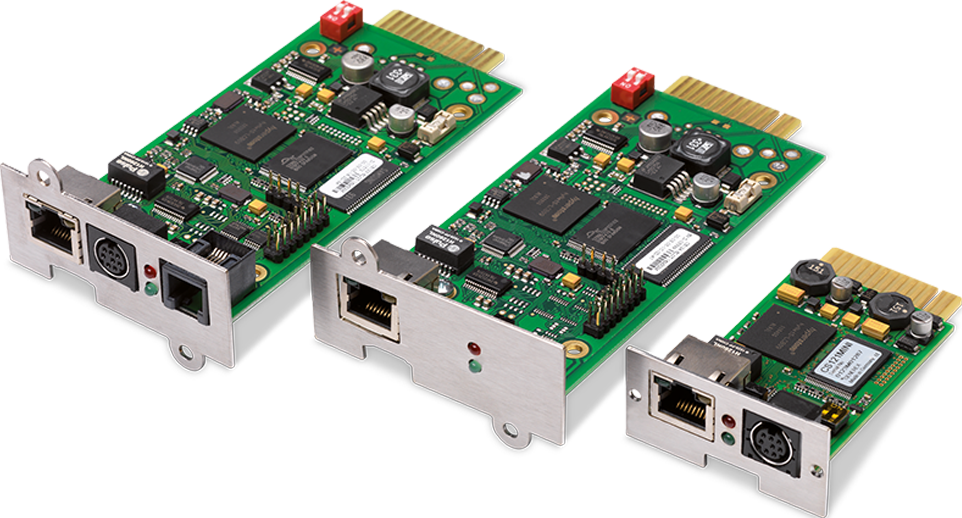
SNMP Network-based UPS management

SNMP adapters are communication extensions for the monitoring of UPS devices via the network or web.


If needed, a phased shutdown of all relevant servers in the network is possible. Via Wake- up-on-LAN, the servers can be re-activated. This enables an automated shutdown and reboot of the system. The UPS can also be configured and monitored by network management software with the integrated SNMP agent according to RFC1628.


The PRO and mini version of the SNMP adapter further enables the integration of features such as area access control, air condition or smoke and/or fire detectors. In addition, temperature and humidity can be measured and administered by means of optical sensors. The SNMP PRO adapter enables, among other features, the connection of an intelligent load management distributor.

Chemcad Nxt -

Finally, the role of Chemcad NXT in an engineer’s toolkit is ecological as much as technical. It fits into the lifecycle of a project: initial scoping and mass-and-energy balances, preliminary equipment sizing, safety and operability checks, and handoff to detailed design. By producing transparent, auditable results and supporting iterative exploration, it helps teams make data-driven decisions earlier and with less uncertainty.

A pragmatic strength of Chemcad NXT is how it balances ease-of-use with depth. For routine tasks an engineer can rely on sensible defaults and prebuilt templates; for nuanced problems the same environment reveals knobs for setting residence times, specifying reaction kinetics, defining tray efficiencies, or customizing heat-transfer correlations. Training materials and example libraries help shorten the ramp-up time: users can adapt example flowsheets rather than starting from a blank canvas, which is especially helpful when modeling industry-standard processes such as crude distillation, gas processing, or solvent recovery. chemcad nxt

Chemcad NXT also emphasizes data integration and workflows. Simulation rarely exists in isolation: process data, lab measurements, and equipment specifications must all be reconciled. The software supports importing and exporting streams and unit results, interfacing with spreadsheets, and generating structured reports. That makes it plausible to embed simulation studies into broader engineering tasks like feasibility assessments, debottlenecking studies, and economic evaluations. Report-generation features let teams capture assumptions, present key material and energy balances, and produce tables and plots that communicate findings to managers or clients. Finally, the role of Chemcad NXT in an

Another important element is modularity. Units are encapsulated and parametrized, which makes it straightforward to configure detailed equipment: splitters, heat exchangers, compressors, reactors (with several reactor models), and various types of separation units. More advanced users can assemble complex sequences — multistage columns with interstage feeds and side draws, integrated heat-pinch networks, or recycle loops with convergence strategies — and rely on robust numerical solvers to find steady-state solutions. For many engineers, the quality of a simulator is judged by how it handles difficult convergence cases; Chemcad NXT invests in solver options, initialization strategies, and under-relaxation controls so users can guide or automate solution finding. A pragmatic strength of Chemcad NXT is how

Chemcad NXT began as an ambitious effort to reimagine process simulation for chemical engineers: to move beyond the constraints of legacy simulators and deliver an environment that felt modern, flexible, and approachable while still handling the rigorous thermodynamics and flowsheeting tasks engineers rely on. Its design philosophy centered on three practical goals — clarity, modularity, and extensibility — and those priorities shaped its user experience and technical architecture.

Call in the experts

We are ready and waiting to offer trusted, expert advice on how to overcome your power challenges and set your organization up for the future. Please get in touch and we will show you what we can do.

Sign up to our newsletter

Be the first to hear about our latest work, insights and successes.