SPEECHTEXTER
...

Illu 14pdf: Adde

Published: March 26 2026 In recent years the name “Adde Illu 14” has begun to surface in academic circles, industry newsletters, and online forums that discuss sustainable development, cultural heritage, and digital archiving. The most common reference is a PDF document titled Adde Illu 14.pdf that consolidates a wealth of research, case studies, and policy recommendations around a specific project or initiative. While the exact content can vary depending on the source (the file is often shared in different contexts), the PDF generally serves as a definitive guide for stakeholders interested in the Adde Illu region or the associated program.

These figures illustrate how a well‑crafted PDF can . 7. Frequently Asked Questions (FAQ) | Question | Answer | |----------|--------| | Is the PDF free to download? | Yes. All official releases are openly accessible under a Creative Commons Attribution‑NonCommercial 4.0 license. | | Can I use the data for commercial purposes? | No. The NC (Non‑Commercial) clause prohibits commercial exploitation without explicit permission from the rights holder. | | What language(s) is the PDF available in? | Primarily English, with an Amharic translation (PDF‑A) and a French summary for international partners. | | How often is a new “Adde Illu 14” version released? | Every 18‑24 months, coinciding with the completion of a new project phase. | | Who authored the document? | A multidisciplinary team led by Dr. Mekonnen Alemu (Hydrology) and Prof. Léa Dubois (Development Studies), with contributions from local NGOs and community groups. | 8. Conclusion The Adde Illu 14.pdf is more than a static document; it is a living knowledge hub that captures the evolution of a complex development effort in one of Africa’s most challenging environments. By providing rigorous data, vivid case studies, and clear policy guidance, it empowers a wide range of stakeholders to act decisively and responsibly. Adde Illu 14pdf

If you have not yet explored the latest version, , verify its authenticity, and start leveraging its insights for research, policy, or on‑the‑ground action. In a world where evidence‑based decision‑making is essential, the Adde Illu 14 PDF stands as a model of how concise, well‑structured documentation can drive real, positive change. Author’s note: This article is based on publicly available information and does not reproduce any copyrighted content from the Adde Illu 14 PDF. All data references are illustrative and meant to guide readers toward responsible use of the original document. Published: March 26 2026 In recent years the

| Metric | Evidence | |--------|----------| | | The Ethiopian Ministry of Water cited the Phase 14 recommendations in its 2025 National Water Strategy. | | Academic citations | Over 120 peer‑reviewed articles have referenced the PDF (Google Scholar, as of early 2026). | | Community adoption | 3 pilot villages reported a 27 % increase in water‑security after implementing the rain‑harvest designs described in the case studies. | | Funding | International donors allocated US $15 million for Phase 15, directly attributing the decision to the data presented in the PDF. | These figures illustrate how a well‑crafted PDF can

SpeechTexter is a free multilingual speech-to-text application aimed at assisting you with transcription of notes, documents, books, reports or blog posts by using your voice. This app also features a customizable voice commands list, allowing users to add punctuation marks, frequently used phrases, and some app actions (undo, redo, make a new paragraph).

SpeechTexter is used daily by students, teachers, writers, bloggers around the world.

It will assist you in minimizing your writing efforts significantly.

Voice-to-text software is exceptionally valuable for people who have difficulty using their hands due to trauma, people with dyslexia or disabilities that limit the use of conventional input devices. Speech to text technology can also be used to improve accessibility for those with hearing impairments, as it can convert speech into text.

It can also be used as a tool for learning a proper pronunciation of words in the foreign language, in addition to helping a person develop fluency with their speaking skills.

using speechtexter to dictate a text

Accuracy levels higher than 90% should be expected. It varies depending on the language and the speaker.

No download, installation or registration is required. Just click the microphone button and start dictating.

Speech to text technology is quickly becoming an essential tool for those looking to save time and increase their productivity.
Features

Powerful real-time continuous speech recognition

Creation of text notes, emails, blog posts, reports and more.

Custom voice commands

More than 70 languages supported

Technology

SpeechTexter is using Google Speech recognition to convert the speech into text in real-time. This technology is supported by Chrome browser (for desktop) and some browsers on Android OS. Other browsers have not implemented speech recognition yet.

Note: iPhones and iPads are not supported

List of supported languages:

Afrikaans, Albanian, Amharic, Arabic, Armenian, Azerbaijani, Basque, Bengali, Bosnian, Bulgarian, Burmese, Catalan, Chinese (Mandarin, Cantonese), Croatian, Czech, Danish, Dutch, English, Estonian, Filipino, Finnish, French, Galician, Georgian, German, Greek, Gujarati, Hebrew, Hindi, Hungarian, Icelandic, Indonesian, Italian, Japanese, Javanese, Kannada, Kazakh, Khmer, Kinyarwanda, Korean, Lao, Latvian, Lithuanian, Macedonian, Malay, Malayalam, Marathi, Mongolian, Nepali, Norwegian Bokmål, Persian, Polish, Portuguese, Punjabi, Romanian, Russian, Serbian, Sinhala, Slovak, Slovenian, Southern Sotho, Spanish, Sundanese, Swahili, Swati, Swedish, Tamil, Telugu, Thai, Tsonga, Tswana, Turkish, Ukrainian, Urdu, Uzbek, Venda, Vietnamese, Xhosa, Zulu.

Instructions for web app on desktop (Windows, Mac, Linux OS)


Requirements: the latest version of the Google Chrome [↗] browser (other browsers are not supported).

1. Connect a high-quality microphone to your computer.

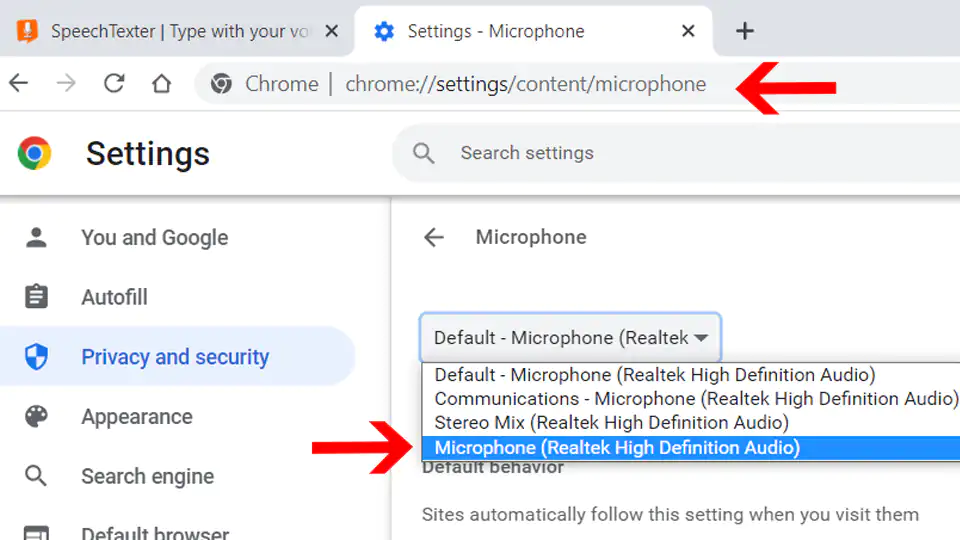
2. Make sure your microphone is set as the default recording device on your browser.

To go directly to microphone's settings paste the line below into Chrome's URL bar.

chrome://settings/content/microphone


Set microphone as default recording device

To capture speech from video/audio content on the web or from a file stored on your device, select 'Stereo Mix' as the default audio input.

3. Select the language you would like to speak (Click the button on the top right corner).

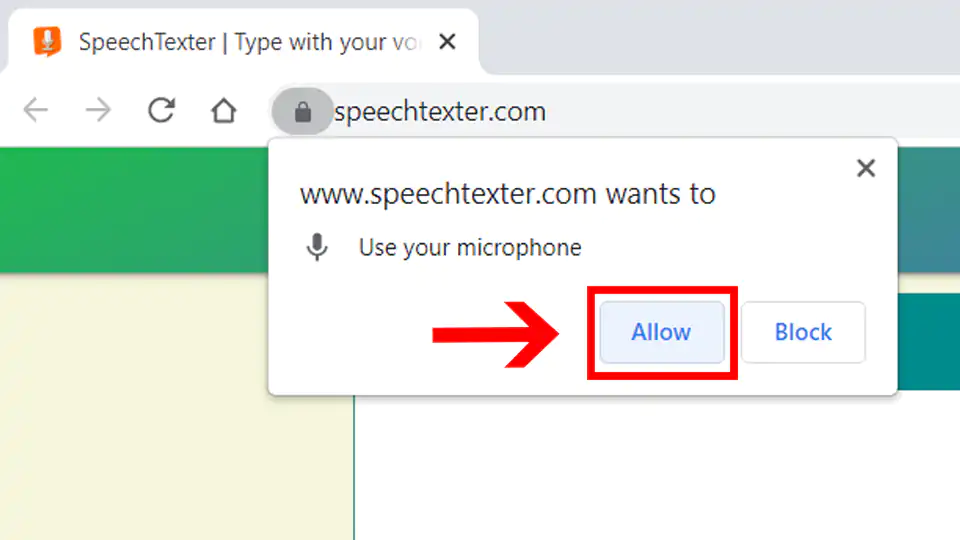
4. Click the "microphone" button. Chrome browser will request your permission to access your microphone. Choose "allow".

Allow microphone access

5. You can start dictating!

Instructions for the web app on a mobile and for the android app (the android app is no longer supported)


Requirements:
- Google app [↗] installed on your Android device.
- Any of the supported browsers if you choose to use the web app.

Supported android browsers (not a full list):
Chrome browser (recommended), Edge, Opera, Brave, Vivaldi.

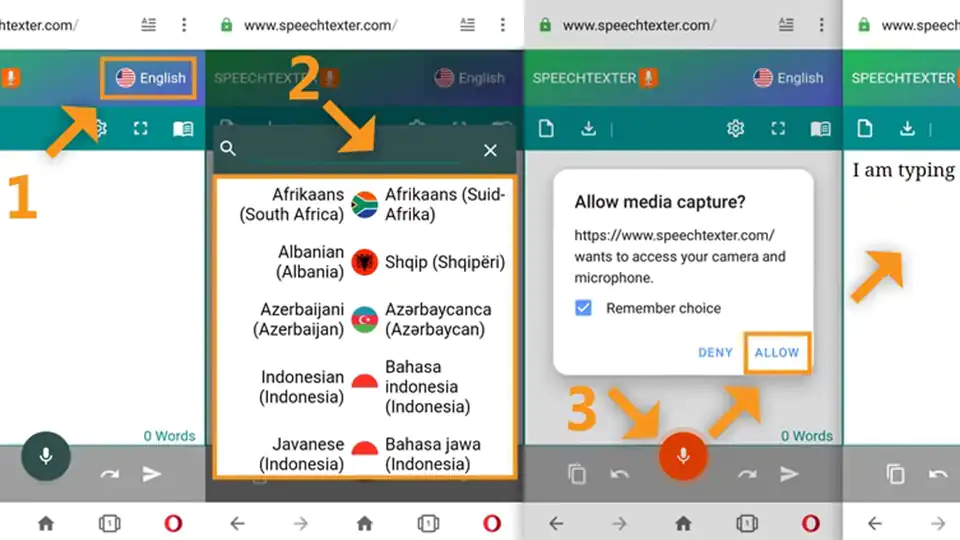
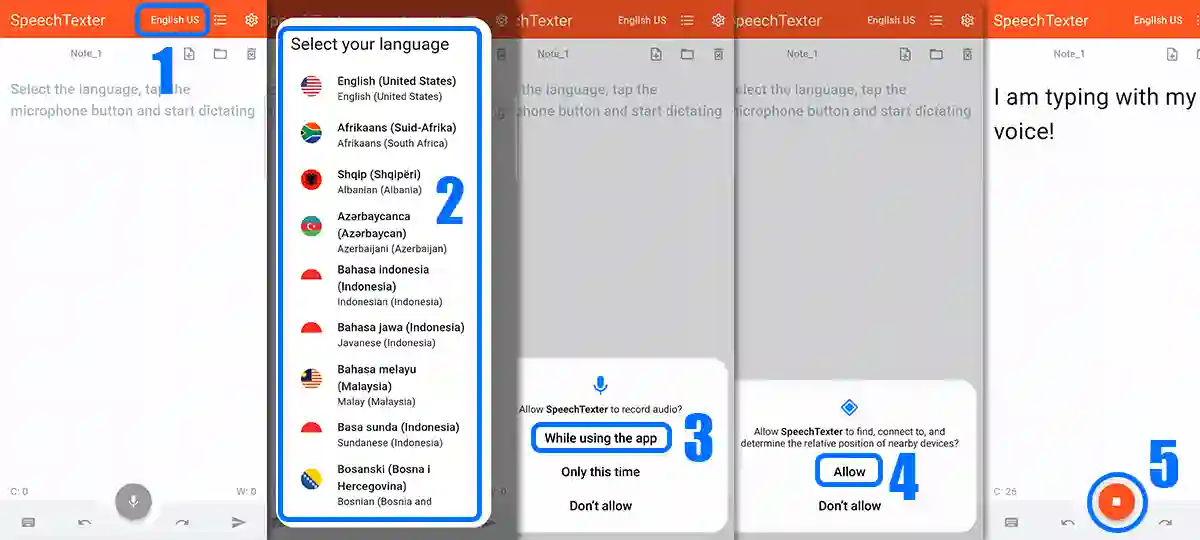
1. Tap the button with the language name (on a web app) or language code (on android app) on the top right corner to select your language.

2. Tap the microphone button. The SpeechTexter app will ask for permission to record audio. Choose 'allow' to enable microphone access.

instructions for the web app
web app

instructions for the android app
android app

3. You can start dictating!

Published: March 26 2026 In recent years the name “Adde Illu 14” has begun to surface in academic circles, industry newsletters, and online forums that discuss sustainable development, cultural heritage, and digital archiving. The most common reference is a PDF document titled Adde Illu 14.pdf that consolidates a wealth of research, case studies, and policy recommendations around a specific project or initiative. While the exact content can vary depending on the source (the file is often shared in different contexts), the PDF generally serves as a definitive guide for stakeholders interested in the Adde Illu region or the associated program.

These figures illustrate how a well‑crafted PDF can . 7. Frequently Asked Questions (FAQ) | Question | Answer | |----------|--------| | Is the PDF free to download? | Yes. All official releases are openly accessible under a Creative Commons Attribution‑NonCommercial 4.0 license. | | Can I use the data for commercial purposes? | No. The NC (Non‑Commercial) clause prohibits commercial exploitation without explicit permission from the rights holder. | | What language(s) is the PDF available in? | Primarily English, with an Amharic translation (PDF‑A) and a French summary for international partners. | | How often is a new “Adde Illu 14” version released? | Every 18‑24 months, coinciding with the completion of a new project phase. | | Who authored the document? | A multidisciplinary team led by Dr. Mekonnen Alemu (Hydrology) and Prof. Léa Dubois (Development Studies), with contributions from local NGOs and community groups. | 8. Conclusion The Adde Illu 14.pdf is more than a static document; it is a living knowledge hub that captures the evolution of a complex development effort in one of Africa’s most challenging environments. By providing rigorous data, vivid case studies, and clear policy guidance, it empowers a wide range of stakeholders to act decisively and responsibly.

If you have not yet explored the latest version, , verify its authenticity, and start leveraging its insights for research, policy, or on‑the‑ground action. In a world where evidence‑based decision‑making is essential, the Adde Illu 14 PDF stands as a model of how concise, well‑structured documentation can drive real, positive change. Author’s note: This article is based on publicly available information and does not reproduce any copyrighted content from the Adde Illu 14 PDF. All data references are illustrative and meant to guide readers toward responsible use of the original document.

| Metric | Evidence | |--------|----------| | | The Ethiopian Ministry of Water cited the Phase 14 recommendations in its 2025 National Water Strategy. | | Academic citations | Over 120 peer‑reviewed articles have referenced the PDF (Google Scholar, as of early 2026). | | Community adoption | 3 pilot villages reported a 27 % increase in water‑security after implementing the rain‑harvest designs described in the case studies. | | Funding | International donors allocated US $15 million for Phase 15, directly attributing the decision to the data presented in the PDF. |